
Demystifying Social Media: Do You Speak Horn?
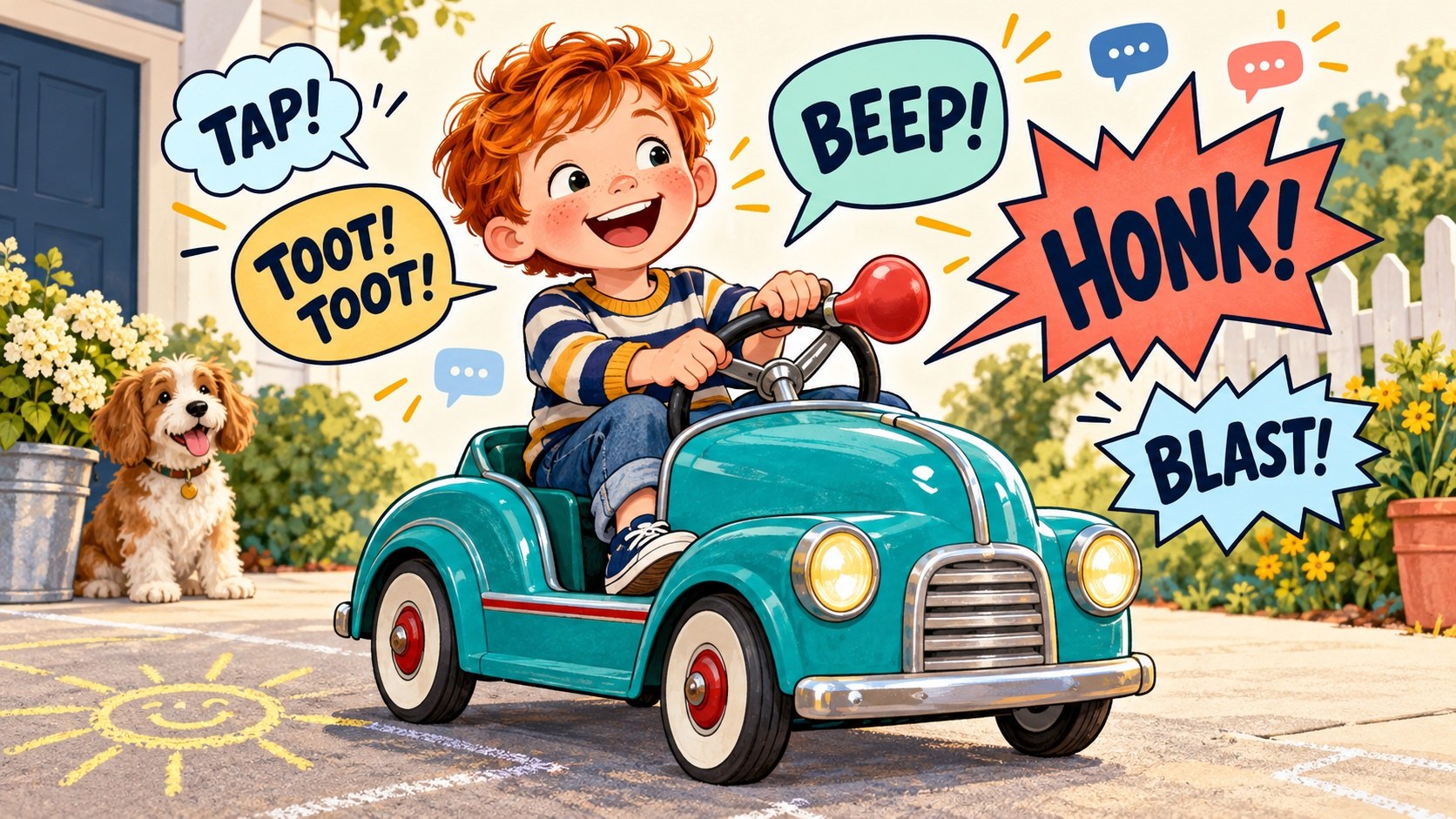
For decades, drivers have used horn honking to communicate. A horn can warn, greet, complain, or nudge. It can also leave everyone nearby wondering, “Was that meant for me?”
Sound familiar? A business social media post can create the same confusion. You intend a friendly reminder. A customer hears impatience. You share a joke. Someone else hears criticism. The message leaves your hands, and the audience supplies the tone.
A honk offers no subject line, facial expression, or helpful footnote. You may not know who sent it, who should respond, or what the driver wants. Its meaning can also change with the situation. The same short sound might feel friendly in a parking lot and startling on a busy road.
Until someone publishes a universal horn dictionary, here is my lighthearted guide. These translations illustrate communication styles. They are not formal horn signals or driving instructions.
Tap
A tap is a light touch on the horn. Think of it as the gentle reminder of the horn world. It seems to say, “I don’t want to be rude, but the light has changed. Do you think we might go now?”
Of course, the driver ahead may hear, “Hurry up!” That is the trouble with a message that arrives without context.
Your business equivalent might be a short follow-up: “Just checking in.” You mean to help. The recipient may feel pressure. Add a little clarity: “Would you like me to resend the estimate? I’m happy to answer questions.” Now the customer knows why you reached out.
Toot
Taps and toots can sound alike, but a toot has a friendlier personality. Imagine your old college roommate spotting you across a parking lot. “Toot! Toot!” might mean, “Hello! It’s me!”
Perhaps you still drive the car you had in college. Perhaps duct tape now holds part of it together. Your roommate, meanwhile, waves from a shiny new vehicle. Suddenly, a cheerful greeting triggers a review of your last 20 years. Sigh. That is a lot of meaning for two little toots.
On social media, the toot resembles a friendly acknowledgment. Thank a customer, congratulate a neighboring business, or welcome a new team member. A specific, sincere message helps people understand your intention. You do not need to turn every greeting into a sales pitch.
Honk
A honk has more urgency. It might mean, “Watch out!” or “Pay attention!” It could also mean, “The light has been green for a while.” Everyone within earshot hears the sound, although only one driver may know why it happened.
Businesses have their own version of the honk. A post announces a deadline, a service interruption, or a change in hours. The message needs attention, but clarity matters more than volume.
Instead of posting “LAST CHANCE!!!,” explain what ends and when. For example: “Book by Friday at 5 p.m. Eastern to receive the introductory rate.” A clear deadline gives people useful information. Repeated exclamation points mostly tell them you found the keyboard.
Blast
A blast is the horn world’s loudest complaint. In my unofficial dictionary, it often translates as, “Get back in your lane!” The driver may add gestures, commentary, and a remarkable amount of indignation.
A blast can startle everyone nearby. Online, an angry reply can reach people far beyond the original conversation. A screenshot may travel without the question or complaint that prompted it.
When someone criticizes your business, pause before responding. Address the issue with a calm, specific reply. If you need an order number or other private information, invite the customer to continue through an appropriate private channel. Keep personal details out of public comments. Your response speaks to future customers as well as the person who complained.
What the Horn Analogy Means for Business in 2026
The tools change, but the communication problem stays familiar. Your audience encounters posts, short videos, comments, direct messages, and automated replies. Each format gives people a different amount of context. A quick reply that feels efficient to your staff may feel abrupt to a customer.
If you use AI to draft a caption or response, review it before you publish. Check the facts, tone, and promised next step. A polished sentence can still misunderstand the customer’s question. Make sure your business would stand behind the words if you said them face to face.
Write every post and reply with the reader’s benefit in mind. Explain how the information helps them solve a problem, make a decision, or take the next step. Before you publish, ask: Who needs this message? What will they gain from it? What should they do next? If the answers remain unclear, rewrite the message.
You can also read the post aloud. Replace unexplained shorthand with ordinary words. Include the date, time zone, or location when those details matter. If a joke needs a long explanation, save it for a conversation where people can hear your tone.
The next time you hear a tap, toot, honk, or blast, you may still wonder who the driver meant to reach. Let that uncertainty remind you to give your business audience something better: a clear message, a useful next step, and a tone that fits the moment.
Happy communicating. Toot. Toot.
Questions and Answers The Language of Social Media
Q. What does horn honking have to do with business social media?
A. Both can communicate intention without giving the audience enough context. A honk may sound friendly or impatient. A short post can create the same uncertainty. Explain what you mean and who should act.
Q. How can I tell whether my reminder sounds like a helpful tap or an impatient honk?
A. Read it from the customer’s perspective. State why you are following up and offer a useful next step. Replace vague pressure with a clear question, deadline, or offer to help.
Q. How should my business respond when a customer posts an angry comment?
A. Pause, acknowledge the concern, and explain how you can help. Move private account details to a suitable private channel. Avoid sarcasm or a public argument. Other customers will judge your business by the response they see.
Q. Can AI write social media replies that sound like my business?
A. AI can help draft a reply, but you should review the result. Confirm the facts and make sure it answers the customer’s question. Explain what helps the reader, then give a useful next step. Approve any promises before the message reaches a customer.
About Margaret Ross

Visible Strategies AI Margaret Ross writes about websites, local search, social media, and AI for small business owners. Through Visible Strategies AI, a division of Visible Strategies LLC in Atlanta, Georgia, she helps businesses build a clearer online presence and make it easier for customers to find them, understand their services, and take the next step. Her articles offer practical guidance for business owners creating their first website or improving an existing one. She focuses on clear communication, customer needs, and making informed marketing decisions.