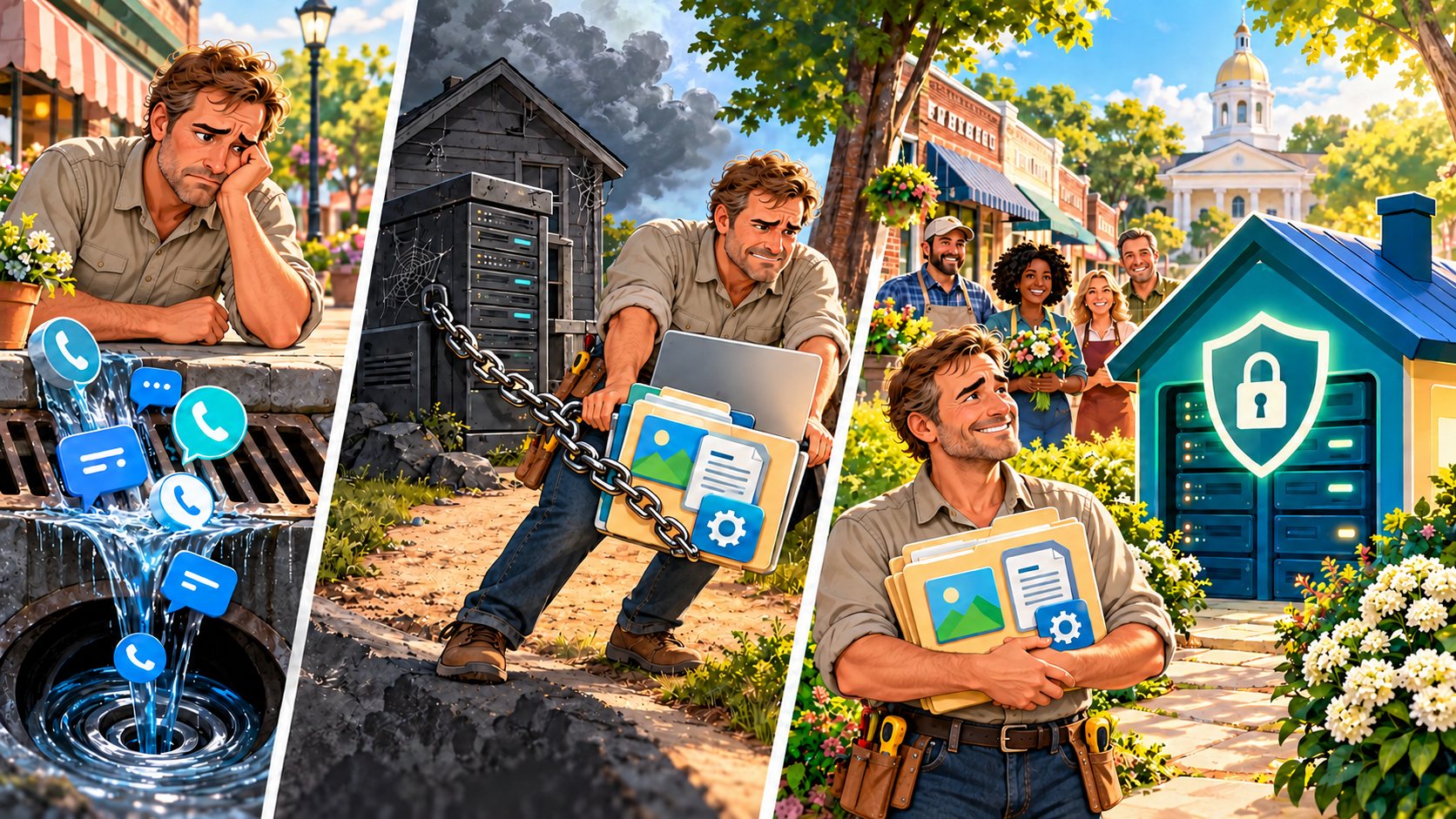
When you launch a small business in the South Metro Atlanta area, you are immediately faced with a critical choice: Do you build your digital presence on a rented platform, or do you own your website as a true independent business asset?
Continue
Your neighbors are searching for local businesses they can trust. Discover how a clear, mobile-friendly website can help businesses in Newnan, Fayette County, Griffin, and nearby communities connect with customers—without a big-agency budget.
Continue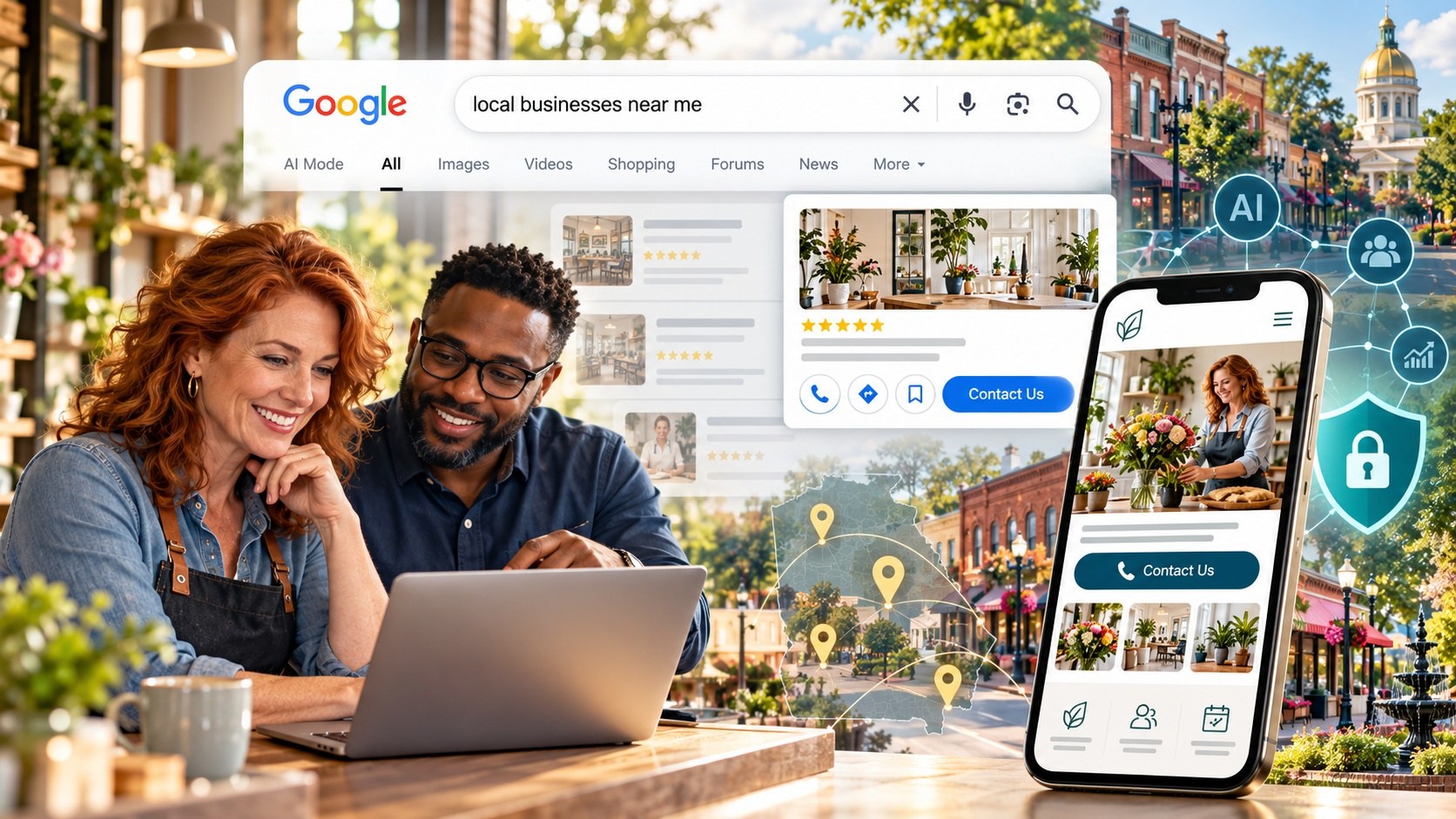
Your next customer may search for a business like yours without ever reaching your homepage. They might compare companies in Google Maps, read an AI-generated answer, browse a directory, or ask a follow-up question in Chrome. For a small business in Georgia, that creates a practical challenge: help customers discover your business, understand why you fit their needs, and contact you without unnecessary effort. As we approach 2027, your website needs to support each of those steps. An attractive design matters. Clear information, local relevance, mobile usability, and security give that design a business purpose. Our original 2024 article emphasized mobile design, loading speed, easy navigation, and conversational searches. Those priorities addressed common obstacles between a customer and a purchase. A customer could struggle to find your business when your website lacked useful service information or clear location details. After arriving, they could leave because the page loaded slowly, the text looked tiny, or the contact form demanded too much effort. Mobile access remains especially important. Google uses the mobile version of a website’s content for indexing and ranking. Your phone experience should provide the same essential information customers can find on a desktop. [1] One recommendation needs correcting. Our
Continue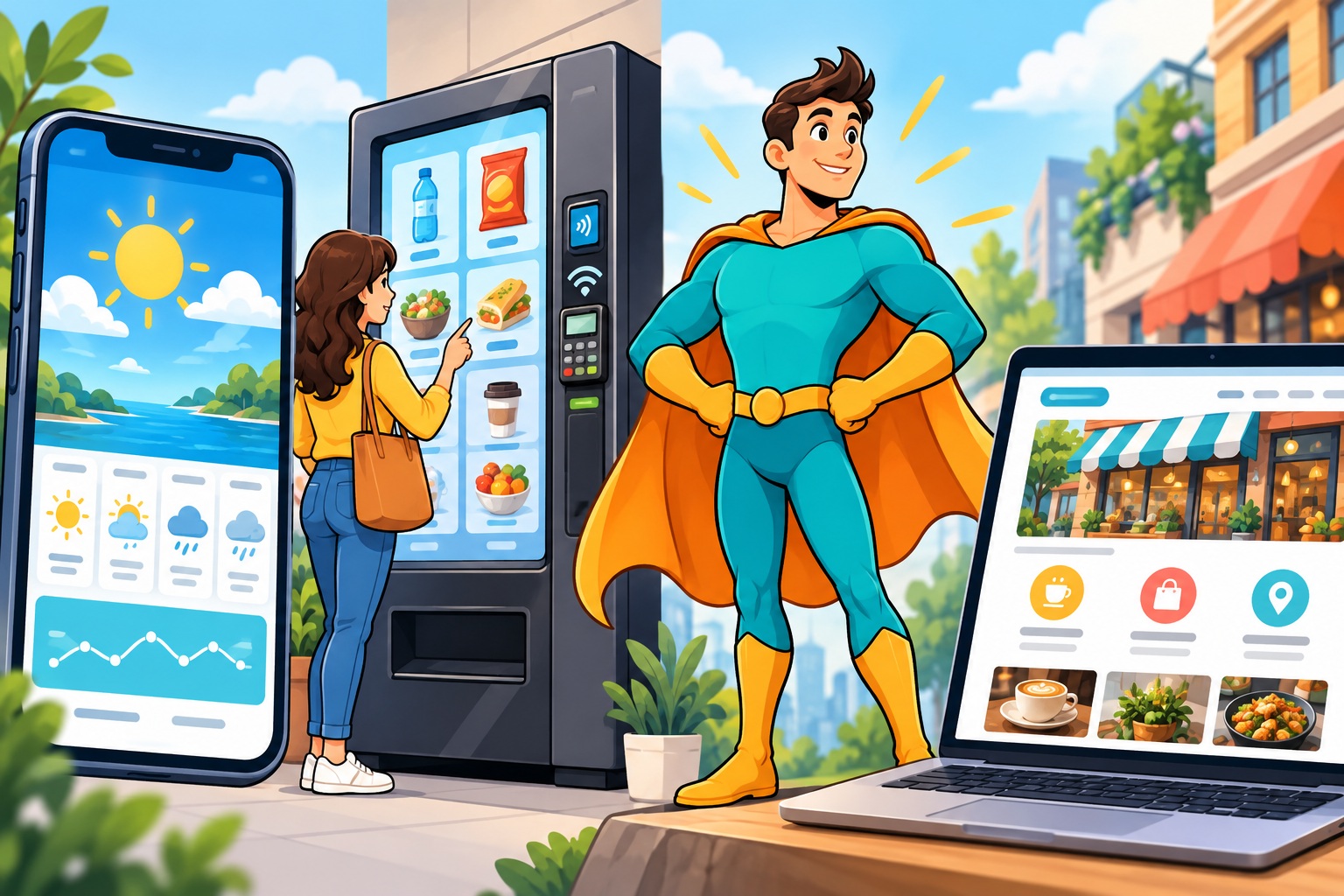
Imagine a customer requesting a quote while you finish a job. Your website saves the inquiry and alerts you by email. Later, you open a private dashboard, check the details, and follow up. Those small actions can make your website useful long after a visitor reads the homepage. Think of Clark Kent and Superman. Your public website introduces the business: who you are, what you offer, and how to contact you. Its app side does the work behind the scenes. You do not need superhero-sized software to benefit. A dependable contact form or booking tool can be enough. A weather app provides another familiar example. The screen looks simple, but the forecast depends on information supplied behind the scenes. A touchscreen vending machine works the same way: you make a selection, and other systems handle availability and payment. A business website can combine an attractive screen with useful services, too. Hosting is the environment that makes your website available online. The right choice depends on what the site must do, not whether AI helped build it. A simple brochure site can use ordinary static hosting. Some modern React or Vite projects build into files that a static host can serve.
Continue
A convincing email can put your business at risk before anyone downloads a file. A criminal might impersonate a supplier, request new payment instructions, or send your team to a fake sign-in page. In 2026, protect your business by building verification into everyday work, especially when someone asks for money, credentials, or access. Your employees handle quotes, invoices, customer inquiries, and account notices all day. Criminals exploit that routine. A short pause and a separate verification step can help your team protect cash flow, customer information, and the relationships you have worked to earn. Social engineering describes tactics that manipulate people into taking actions that benefit an attacker. Phishing uses deceptive messages to steal information, deliver malicious software, or prompt a fraudulent transaction. Spear phishing targets a particular person or organization with details that make the request feel familiar. [1] Business email compromise, or BEC, often targets the payment process. A message may appear to come from a supplier or executive and direct an employee to send money to a criminal. Some schemes use a stolen mailbox; others rely on impersonation. An attachment is not necessary for the scam to work. [2] A documented supplier impersonation scheme targeted two U.S.-based
Continue
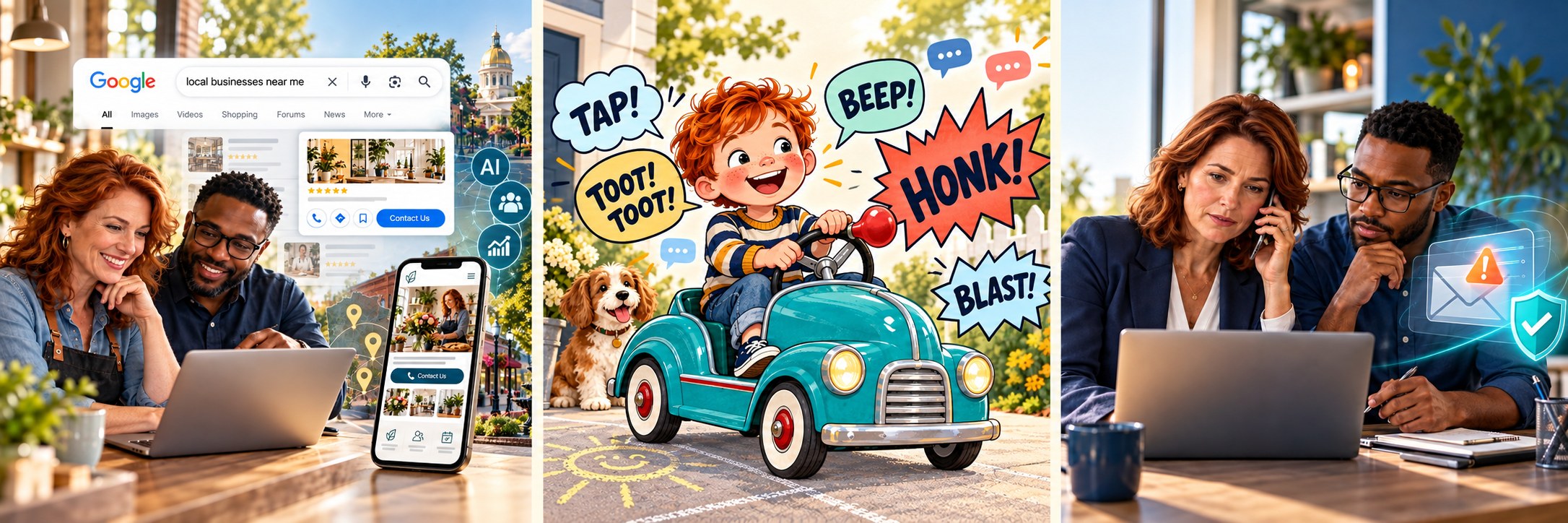
For decades, drivers have used horn honking to communicate. A horn can warn, greet, complain, or nudge. It can also leave everyone nearby wondering, “Was that meant for me?” Sound familiar? A business social media post can create the same confusion. You intend a friendly reminder. A customer hears impatience. You share a joke. Someone else hears criticism. The message leaves your hands, and the audience supplies the tone. A honk offers no subject line, facial expression, or helpful footnote. You may not know who sent it, who should respond, or what the driver wants. Its meaning can also change with the situation. The same short sound might feel friendly in a parking lot and startling on a busy road. Until someone publishes a universal horn dictionary, here is my lighthearted guide. These translations illustrate communication styles. They are not formal horn signals or driving instructions. A tap is a light touch on the horn. Think of it as the gentle reminder of the horn world. It seems to say, “I don’t want to be rude, but the light has changed. Do you think we might go now?” Of course, the driver ahead may hear, “Hurry up!” That is the
Continue